|
MADE BY AGENTS
The Agent Roundup
Hey from Tobias,
This issue covers two weeks: I moved the newsletter to a new sending setup.
As I posted on X, building a tool with an agent takes an afternoon now. Keeping all of them alive is the actual work: updates, broken integrations, security fixes. Vibe coding solved creation. Ownership and maintenance is the open problem.
Below: one-agent design, two security stories, always-on assistants, who keeps agents alive, plus a video.
Last two weeks • Anthropic says fold subagents back into one loop with skills. • A PHP flaw chained into rooted firewalls, and Claude wrote a Linux remote root exploit. • A poisoned extension, hijacked repos and a planted AGENTS.md target AI coding setups. • Always-on assistants now available from xAI, Meta, OpenAI and Anthropic. |
Agent design
Fold Your Subagents Into One Agent Loop
Anthropic published a guide on when to fold subagents into your main agent loop. Across several enterprise setups, their Applied AI team found that a single agent with skills frequently beat both one-prompt and subagent designs on quality, often at lower cost and latency. One customer that compared both saw roughly 2x faster runtime with the single loop.
Anthropic warns that every team adding its own rules to the system prompt creates a Frankenprompt. Their advice: fold one subagent in at a time, keep it only if the folded version scores worse, and start with as few as 10 golden examples. There's a migration kit. Run each test more than once.
My take: every handoff between agents loses detail and adds cost. Before anyone sells you a multi-agent system, ask: could one agent with good skills and tools do this? I bring this up first in every audit.
Pick one subagent this week and test folding it into your main loop as a skill.
Security
Core Internet Software Keeps Cracking
| • | php2shell: The IDs of two critical PHP flaws leaked a day before the October 21 patches (8.5.12, 8.4.27, 8.3.36, 8.2.35), and CISA added both to its exploited list on October 26. Dream Research reported an attacker chained a custom php2shell exploit with a Linux kernel flaw to root 24 exposed Palo Alto Networks firewalls, then a management server in a US government-affiliated network. Palo Alto's Unit 42 verified it. |
| • | Linux kernel leaks: On October 21, Trend Micro's Zero Day Initiative sent unpatched kernel bug reports to public mailing lists. One of them, ZDI-CAN-33367, lets an ordinary local user get root through the kernel's networking code, and working exploit code came with it. No CVE yet. AlmaLinux shipped fixed kernels October 28. |
| • | Claude's Linux exploit: Anthropic says an unreleased internal Claude model wrote an exploit that runs commands as root on Linux servers with a multipath TCP listener, no credentials needed (CVE-2026-98432). It is patched upstream. Anthropic's advice: scanning your own code is more important than ever. |
| • | eMudhra certificates: Keys for eight eMudhra intermediate certificates were weak, so anyone could forge a certificate for any domain. Browsers blocked them quickly; apps with their own trust stores need updates. |
| • | LiteLLM breach: A malicious litellm 1.107.0 was live for about two hours on October 21. Root cause: an admin key committed to a public repo in May was never revoked, and it led to an owner's unscoped GitHub token that could override branch protection. |
Is it a coincidence that the PHP and Linux bugs leaked before their patches? Officially it is human error, and I cannot prove otherwise. My view: governments hold basically unlimited token budgets for AI-driven hacking. My worry: as AI makes exploits cheaper, one compromised foundation could set off a chain of attacks across core internet infrastructure.
Patch PHP, kernels and trust stores, rotate any key that ever touched a repo, and scope your tokens.
Security
Three Attacks Aimed at AI Coding Setups
| • | Poisoned Claude Code extension: On October 29, a maliciously modified version of Anthropic's Claude Code extension (2.1.312 and 2.1.313) sat in the Cursor marketplace for about eleven hours. It added an attacker's SSH key, set up persistence, and sent host details to the attacker. Cursor removed it and says uninstalling may not be enough. |
| • | 42 hijacked repositories: JFrog found 42 hijacked GitHub repos from 11 legitimate owners, armed with hooks for Claude Code, Gemini, Cursor and VS Code. Opening the workspace with a supported tool can run the hidden payload. |
| • | Drive-by AGENTS.md file: Forever Security caught a malicious AGENTS.md planted in a real customer's Downloads folder, where websites can drop files without a click. In their tests, Codex ran the malware in more than 90% of attempts; Claude Code followed through about 50% of the time. |
My take, from my post on X: a monthly security pass is now the minimum for anyone shipping with agents.
Installed or updated that extension on October 29? Run this check today (macOS), and stop running coding agents inside your Downloads folder.
| grep -qs svc-telemetry ~/.ssh/authorized_keys && echo "svc-telemetry key found" || echo "No key found" |
News worth watching
Four Labs Now Ship Always-On Assistants
Since August, four big labs have shipped agents that keep working in the cloud.
| • | Grok Bot: xAI, August 11. Bots share one cloud computer and coordinate in chat. |
| • | Meta Muse: Meta, September 8. Runs tasks in a dedicated cloud VM. |
| • | OpenAI dots: OpenAI, September 29. Agents on cloud browsers; individuals need ChatGPT Pro ($100 to $500 a month). |
| • | Claude Duet: Anthropic, October 21. A waitlist preview for US Pro, Max and Ultra subscribers that checks with you before it acts. |
Open-source rebuilds like OpenMuse, Open Dot and nanoMuse let you self-host the pattern. My take: treat assistants like interns. I run a small crew of Grok Bots for my business and it's incredible where this is going.
Give any assistant read access first, and make it ask for permission to write changes.
Builder notes
Clients Pay for the Problem Solution
As I replied on X, clients never paid for code anyway. They paid for the problem solution. That part didn't get cheaper.
An AI builder who makes white-label automations for agencies told me automation is the easy part. The real work is keeping the system useful as the business changes. Their open question: who iterates after delivery?
In a small sample of about ten US and Canadian software company job posts, four were hiring forward deployed engineers for integrations and data mapping. My read: the tools are adopted. The hard part is shared standards, guardrails and review habits.
Before you deploy an agent, assign someone who keeps it alive.
From the channel
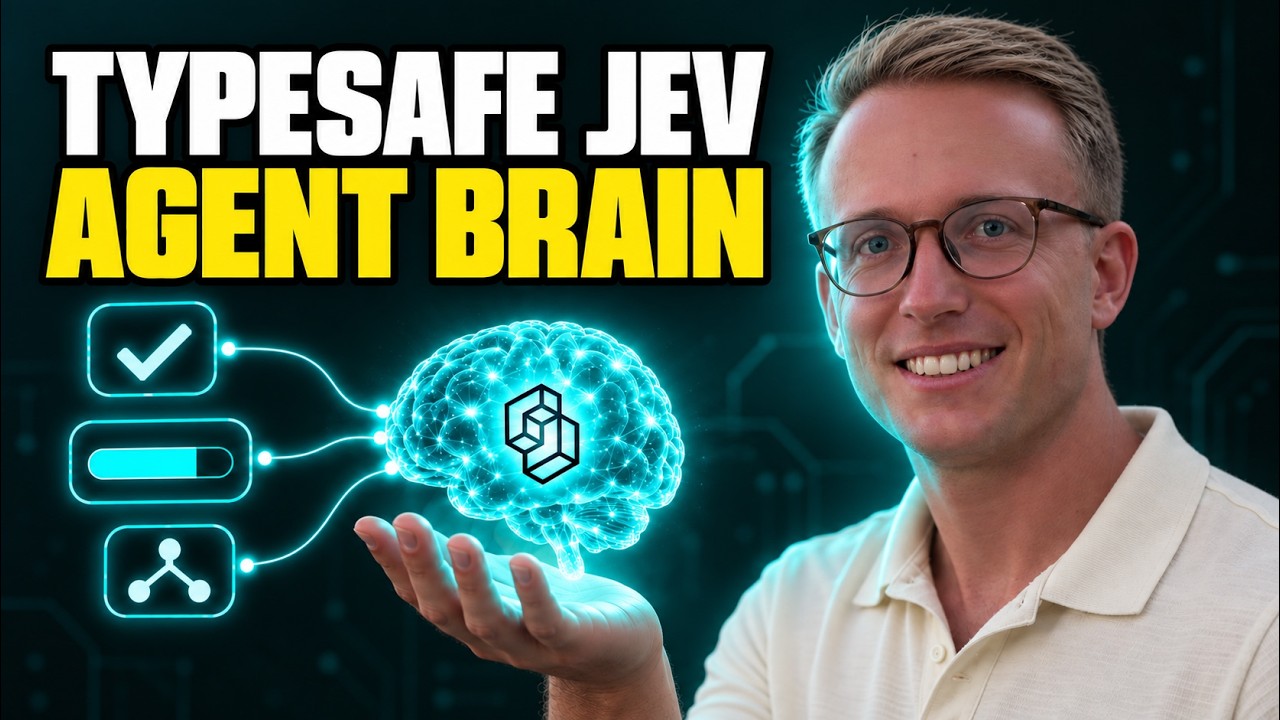
Noul, Choice, Score: The 25-Minute Jev Crash Course for AI Builders
My latest video, from September, on TypeSafe's Jev. Send state plus a typed schema (Choice, Score or Noul) and get calibrated probabilities back in a few hundred milliseconds. Includes a quote automation demo.
Subscribe on YouTube for the next one. |
If you want someone to ask the right questions before starting your own AI projects, that's part of my Deep AI Audit.
Deploy and maintain.
Tobias
|
