Welcome to Edition #8 of Agents Made Simple | Microsoft and Google both had their big developer-centric conferences, where they introduced interesting new agent-based applications. While Microsoft is more focused on enterprise use cases, Google targets consumers and small businesses. | Generative AI leveled up with Veo 3, Google’s video model that can generate ultra-realistic videos of people, including background noises and speech. | At the same time, the AI labs Mistral and Anthropic released new flagship models. | This week’s topics: | Microsoft Build 2025 agentic highlights Google I/O agentic highlights Mistral Devstral and Document AI OpenAI’s Responses API Cursor 0.5 with new agentic features Claude 4 Opus and Sonnet are now available Why you need guardrails for your AI agents Plus AI investments, trending AI tools, community highlights, and more
|
|
| | 💥 Breakthroughs | Microsoft Build 25 Agent Highlights | 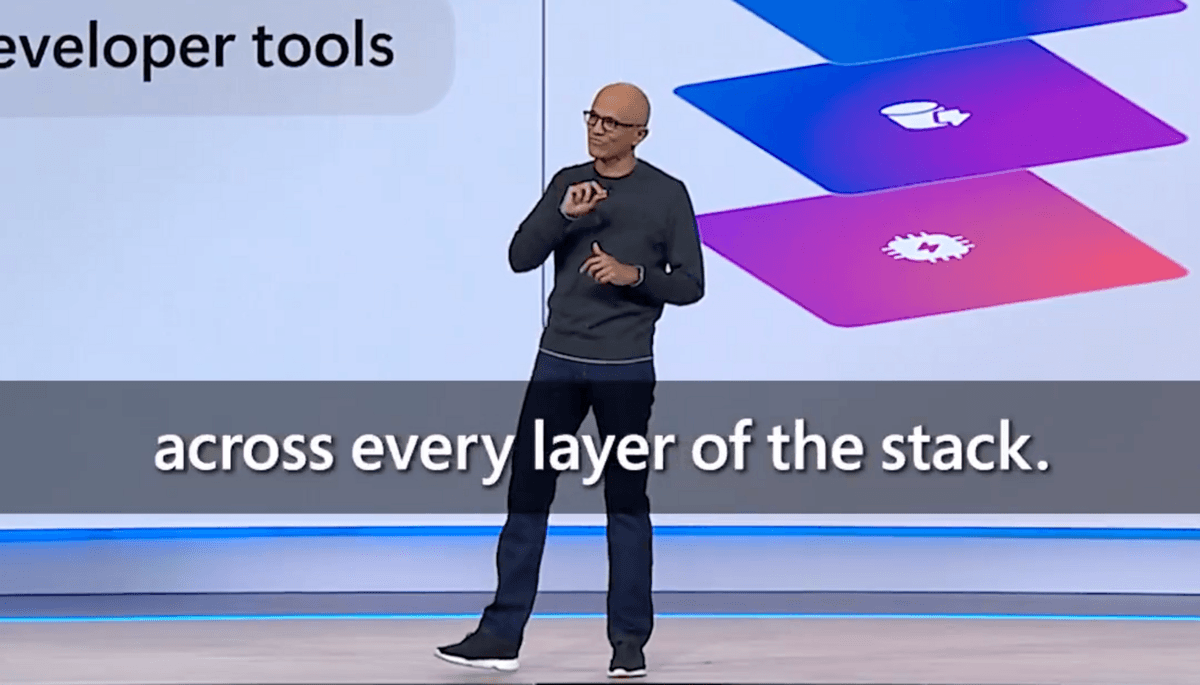 | Source: Microsoft |
| Microsoft announced: | An advanced version of GitHub Copilot with a full coding agent. | Copilot can now learn your company’s brand voice. | Foundry for building apps and agents gets more features. | NLWeb lets you interact with any website using natural language. |
| Google I/O Agent Highlights | 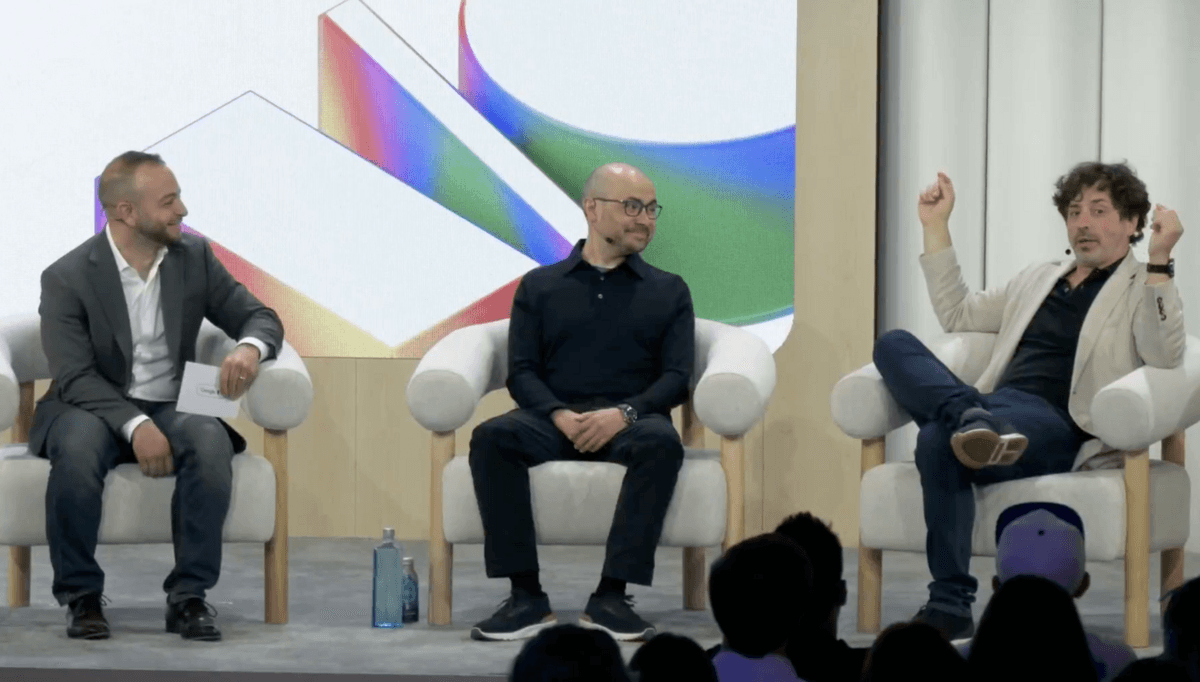 | Source: Google |
| Google announced: | AI mode in search is now powered by Gemini 2.5. | Virtual try-on feature, agentic shopping experience, and search in real-time with multimodal voice queries. | Search and Gemini got an agent mode that lets you run tasks in the background. | Coding agent Jules in public beta. |
| Mistral Devstral & Document AI |  | Source: Mistral |
| Mistral released Devstral, an open-source coding model. It’s outperforming larger rivals on coding tasks. The model is small enough to run on a laptop or a single GPU. | Mistral also released Document AI. It extracts text from documents and images with 99% accuracy via a simple API call. It can process thousands of pages a minute. |
|
| OpenAI’s Agentic App-Building API |  | Source: OpenAI |
| OpenAI enhanced the Responses API with support for remote MCP servers, image generation, code interpreter, background mode, and more. | The Responses API is the core API for building agentic applications. | OpenAI entered the steering committee for MCP, expecting the ecosystem to grow quickly in the coming months. |
| New Agentic Features for Cursor |  | Source: Cursor |
| AI coding IDE Cursor released version 0.5. This update introduces background agents. You can now run many agents in parallel and have them tackle bigger tasks. Also: | Include your entire codebase in context and edit long files faster. | Make multiple codebases available. Export chats to markdown. Improved inline edit and tab feature that works across multiple files. |
| Claude 4 (Opus & Sonnet) Released |  | Source: Anthropic |
| Anthropic launched its next generation of LLMs – Claude Opus 4 and Claude Sonnet 4. | Opus 4 is their most intelligent model with advanced reasoning. Perfect for complex agent applications, advanced coding, or human-quality content creation. | Sonnet 4 performs well for high-volume tasks and most AI use cases. |
|
| | 📈 Investments | 🇺🇸 Microsoft also unveiled Discovery at its Build conference, speeding up science itself. Discovery uses agents to generate ideas, simulate results, and learn. | 🇺🇸 Google upgraded Gemini 2.5 Pro and Flash. A 2.5 Deep Think reasoning model is tested. Gemma 3n launched in preview, a powerful open-source model optimized for mobile devices. Gemini Live with camera and screen sharing rolled out. | 🇺🇸 OpenAI announced its acquisition of io, an AI device start-up co-founded by Apple designer Jony Ive, for $6.5B to bring a new AI-powered device to market. Some details were unveiled about this screen-free product, and Altman predicts it will be a top seller. OpenAI’s data center in Texas secured $11.6B in new funding for its Stargate infrastructure. They also launched Stargate UAE to build data centers in Abu Dhabi. | 🇺🇸 Amazon is testing a new generative AI-powered audio feature that synthesizes product summaries and reviews to make shopping easier. | 🇺🇸 Oracle is about to invest $40B in Nvidia chips for an OpenAI data center | 🇨🇦 Shopify released Summer 25 Edition with AI-driven features, including shopping AI agents, an automated store builder, and upgrades to its Sidekick AI assistant. | 🇪🇺 Capegemini and SAP partner with Mistral to deploy AI for sensitive sectors like financial services, public sector, aerospace, and defense. | 🇨🇳 Tencent introduced Hunyuan Game, the first industrial-grade AI engine for game production and game asset creation. | 🇨🇳 ByteDance released BAGEL, an open-source multimodal foundation model that provides advanced image generation and prompt accuracy. | 🇨🇳 Xiaomi started mass production of its in-house mobile 3-nanometer chip, XRING O1, another step for China towards self-sufficiency. |
|
| | | Why You Need Guardrails for Your AI Agents |
| | |
|  | Source: MBA via Imagen 4 |
| AI agents are powerful, but without safeguards, they can process malicious inputs, generate inappropriate outputs, or waste expensive compute resources. | Guardrails solve this. Let’s take the OpenAI Agents SDK as an example. It lets us: | Validate user inputs before processing Check agent outputs before delivery Run parallel safety checks with fast/cheap models
| Below, let's implement them! | Consider a customer support agent using an expensive GPT-4 model. We don't want users asking it to do their math homework – that's a waste of resources and off-topic. | Input Guardrails run in parallel with your main agent and can immediately halt execution if they detect violations. | Here's how we define one: | from pydantic import BaseModel
from agents import (
Agent, GuardrailFunctionOutput, InputGuardrailTripwireTriggered,
RunContextWrapper, Runner, input_guardrail
)
class HomeworkDetectionOutput(BaseModel):
is_homework: bool
reasoning: str
# Fast guardrail agent using a cheaper model
guardrail_agent = Agent(
name="Homework detector",
instructions="Detect if the user is asking for homework help.",
output_type=HomeworkDetectionOutput,
)
@input_guardrail
async def homework_guardrail(
ctx: RunContextWrapper[None],
agent: Agent,
input: str
) -> GuardrailFunctionOutput:
result = await Runner.run(guardrail_agent, input, context=ctx.context)
return GuardrailFunctionOutput(
output_info=result.final_output,
tripwire_triggered=result.final_output.is_homework,
)
| Next, we attach this guardrail to our main customer support agent: | # Main agent with expensive model
support_agent = Agent(
name="Customer support agent",
instructions="Help customers with product questions and issues.",
input_guardrails=[homework_guardrail], # 🔒 Guardrail attached here
)
async def main():
try:
# This should trigger the guardrail
await Runner.run(
support_agent,
"Can you solve this equation: 2x + 3 = 11?"
)
print("Request processed successfully")
except InputGuardrailTripwireTriggered:
print("🚨 Guardrail blocked inappropriate request!")
| This produces a blocked request – the expensive model never runs! | The guardrail detected homework content and immediately raised an InputGuardrailTripwireTriggered exception, saving compute costs. | But what about checking outputs? | Output Guardrails work similarly but validate the agent's final response: | @output_guardrail
async def safety_guardrail(
ctx: RunContextWrapper,
agent: Agent,
output: MessageOutput
) -> GuardrailFunctionOutput:
# Check if output contains sensitive information
safety_result = await Runner.run(
safety_agent,
output.response,
context=ctx.context
)
return GuardrailFunctionOutput(
output_info=safety_result.final_output,
tripwire_triggered=safety_result.final_output.contains_sensitive_data,
)
# Attach to agent
agent = Agent(
name="Support agent",
instructions="Help customers with their questions.",
output_guardrails=[safety_guardrail], # 🔒 Output validation
output_type=MessageOutput,
)
| And that's how we implement Guardrails in the OpenAI Agents SDK! | Key benefits: | ⚡ Parallel execution - guardrails don't slow down your main agent
💰 Cost savings - block expensive model calls early
🛡️ Layered defense - combine multiple guardrails for robust protection
🔄 Exception handling - clean error management with try/catch blocks | Guardrails are essential for production AI agents, alongside proper authentication, access controls, and monitoring. They're your first line of defense against misuse and unexpected behavior. |
|
| | 👾 AI Apps from Google (Labs) |  | Source: Google |
| 🧵 Stitch: Let’s you vibe design UI’s for applications. Enter text prompts, and it generates nicely looking designs you can export to Figma. | 📒 NotebookLM: Android app released. It lets you generate AI podcasts, study guides, briefing documents, and more via mobile. | 🎆 Imagen 4: Google’s advanced image model. Free access via the Gemini App. | 🌊 Flow with Veo3: Google’s viral AI video creator. Generates sound effects and speech together with realistic video. Requires the Google AI Ultra plan for $125/month. |
|
| |  | PJ Ace @PJaccetturo |  |
| |
I used to shoot $500k pharmaceutical commercials. I made this for $500 in Veo 3 credits in less than a day. What’s the argument for spending $500K now? (Steal my prompt below 👇🏼) | |  | | | 8:12 AM • May 22, 2025 | | | | | | 13.4K Likes 1.43K Retweets | 797 Replies |
|
|  | Google DeepMind @GoogleDeepMind | |
| |
Introducing Gemma 3n, our multimodal model built for mobile on-device AI. 🤳 It runs with a smaller memory footprint, cutting down RAM usage by nearly 3x – enabling more complex applications right on your phone, or for livestreaming from the cloud. Now available in early | |  | | | 2:06 PM • May 23, 2025 | | | | | | 2.44K Likes 303 Retweets | 59 Replies |
|
|  | Brendan O'Donoghue @bodonoghue85 | |
| |
Excited to share what my team has been working on lately - Gemini diffusion! We bring diffusion to language modeling, yielding more power and blazing speeds! 🚀🚀🚀 Gemini diffusion is especially strong at coding. In this example the model generates at 2000 tokens/sec, | Google DeepMind @GoogleDeepMind We’ve developed Gemini Diffusion: our state-of-the-art text diffusion model. Instead of predicting text directly, it learns to generate outputs by refining noise, step-by-step. This helps it excel at coding and math, where it can iterate over solutions quickly. #GoogleIO |
| |  | | | 8:48 PM • May 20, 2025 | | | | | | 2.67K Likes 258 Retweets | 89 Replies |
|
|
|
| | Blog: In-depth articles on AI workflows and practical strategies for growth
AI Tool Collection: Discover and compare validated AI solutions
Consultancy: I help you discover AI potential or train your team |
|
| | | |
|