Welcome to The Agent Roundup | If you put in 80%, you get 80% back. But if you put in 100%, you get 1,000% back. The last 20% is where the magic happens. | | | | Jude Freeman |
|
| Pareto principle vs. perfectionism. This quote reminds me of the reality when developing AI systems and solutions. If I put in only 80% the AI system will work but won’t produce great results. | It won’t be effective because prompts and other parameters were not optimized and tested. It won’t be better than copy-paste automations. | The real value lies in the last 20%. The architecture, code, data, security, prompts. It takes longer and is more effort. Most AI apps stop at 80. The winners do the full thing. | This week’s topics: | Grammarly Launches AI Writing Agents Salesforce Acquires AI Agent Tech Claude Surpasses OpenAI in Enterprise Adoption Cost savings, adoption stats & enterprise success stories AWS MCP, Strands SDK, SmythOS, LambdaTest & more Nvidia Granary & new AI speech translation models How to Build a Privacy-Focused RAG System 5 Ways to Successfully Integrate AI Agents at Work
|
|
| | Grammarly Launches AI Writing Agents | Grammarly is evolving into a productivity platform with the launch of eight specialized AI agents and an AI-native writing surface called "docs". These agents reduce the need for complex prompt engineering. | Key agents include AI Grader (evaluating against rubrics), Reader Reactions (predicting audience understanding), Citation Finder (evidence and formatting), and AI Detector/Plagiarism Checker. | Grammarly showcases the practical application of advanced AI agents in automating complex writing tasks, enhancing authenticity, and improving communication for both students and professionals. | | Salesforce Buys AI Agent Technology | Salesforce's acquisition of Regrello aims to integrate its technology for transforming business data into agentic workflows with Agentforce and Slack, providing developers with enterprise-grade workflow automation tools and offering business leaders a clear path to eliminate hurdles caused by disconnected tools and manual workflows. | Newcomers can view this as making AI agents as easy to deploy as adding a new app to their business software stack. | | Claude Is the Most Popular AI for Enterprises | Anthropic's Claude now commands 32% of the enterprise AI market, surpassing OpenAI (25%) and Google (20%), indicating its growing reputation for enterprise-grade reliability and compliance capabilities | Real-World ROI | The NJ AI Assistant achieved ~20% workforce adoption at just $1 per user monthly, generating multi-million dollar annual savings. | IBM's AskHR handles >2.1 million employee conversations yearly, automating 80+ HR tasks, and cutting support tickets by 75%. | Maximus saved $70,000 and reduced manual finance work by 85% in its first month, identifying duplicate vendor spending and flagging an advertising campaign that should have been canceled. The deployment took just weeks, with immediate value realization. | Digits' AI Bookkeeping Agent achieved 97.8% accuracy (compared to 79.1% for humans), operating 8,500 times faster at 24 times lower cost. | MCI's voice-enabled Jade agent resolves 66% of registration and 82% of lead-retrieval inquiries within 24 seconds, demonstrating dramatic cost savings compared to traditional customer service. | The AA deployed a boost.ai agent in just 30 days, resolving over 75% of customer inquiries on first contact. | Retailers using AI agents see 40-60% reduction in customer service costs, 20-30% improvement in inventory efficiency, and 15-25% increase in sales. Some systems handle 80-90% of customer inquiries, reducing response times to under 30 seconds. | United Airlines uses agentic AI for predictive maintenance, developer productivity (legacy code translation), and hyper-personalized customer engagement. | JP Morgan employs AI-powered DevOps systems to reduce late-stage errors and enable hundreds of monthly deployments. | Shell deployed machine vision AI across 44,000 retail stations for real-time safety monitoring. | Gilead Sciences reduced IT operations processes "from weeks to a couple of days" with multi-agent AI systems. | AstraZeneca parsed over 400,000 clinical trial documents "in roughly an hour" using Databricks' Agent Bricks without writing code. | Kinaxis launched AI agents for supply chain management, cutting "decision cycles from hours to minutes" for over a dozen global manufacturers. | Advanced AI Agent Tools | AWS released new integration patterns to enhance agents with predictive ML models via Amazon SageMaker AI and the Model Context Protocol (MCP). | The open-source Strands Agents SDK enables developers to build data-driven agents in "only a few lines of code". | SmythOS emerged as a visual development platform for designing agent workflows without coding, featuring modular components and strict data governance. | LambdaTest launched a private beta for Agent-to-Agent Testing, creating frameworks for AI systems to test other AI systems autonomously. | Nvidia released Granary, a 1-million-hour multilingual dataset covering 25 European languages, along with new Canary and Parakeet models for speech translation, eliminating language barriers for global applications. | Druva unveiled the industry's first AI agents specifically for data security, built with Amazon Bedrock AgentCore. These agents can "interpret user intent, analyze data, and take meaningful action" without human intervention, such as restoring entire EC2 instances via natural language commands. | | Create How-to Videos in Seconds with AI | | Stop wasting time on repetitive explanations. Guidde’s AI creates stunning video guides in seconds—11x faster. | Turn boring docs into visual masterpieces Save hours with AI-powered automation Share or embed your guide anywhere
| How it works: Click capture on the browser extension, and Guidde auto-generates step-by-step video guides with visuals, voiceover, and a call to action. | Best part? It’s 100% free. | 👉 Download the extension now |
|
| | | How to Design a Privacy-Focused RAG Agent System |
| | |
| 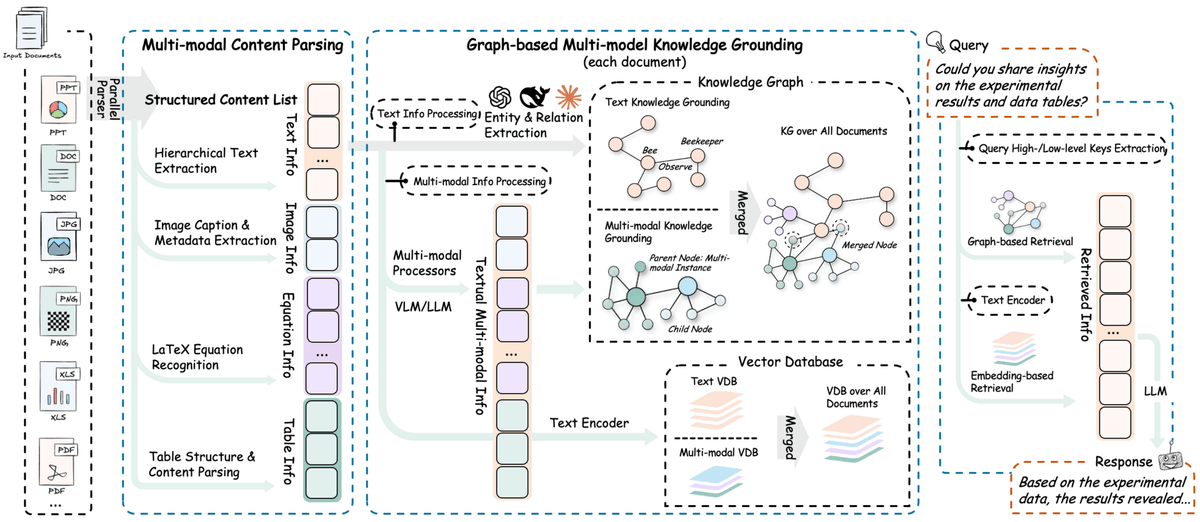 | Source: RAG-Anything |
| TL;DR | RAG (Retrieval-Augmented Generation) combines document search with AI generation to answer questions using your private documents as context. | This system processes multimodal content (text, images, tables, equations) from your files, creates a searchable knowledge graph, and generates accurate answers grounded in your actual data rather than relying solely on pre-trained AI knowledge. The privacy-focused design ensures sensitive documents never leave your infrastructure. | Organizations waste countless hours manually searching through document repositories and often make decisions based on incomplete information, while traditional AI assistants can't access proprietary knowledge and may hallucinate facts. | How It Works (High-Level Overview) | The system transforms your private documents into a secure, searchable knowledge base that answers questions using your actual content rather than generic AI responses. Documents are parsed locally, sensitive data is detected and protected, and all processing happens on your infrastructure with no external data transmission. | Core Infrastructure: | RAG-Anything: Complete multimodal document processing (includes MinerU/Docling parsers) | Local LLM Server: Ollama for running open-source models locally | Python Environment: RAG-Anything handles vector storage and embeddings internally | LibreOffice: Required for Office document processing (separate install) | Simple Security (Local Setup): | File-based Access: Basic folder permissions for document access control | Local Storage: All data stays on your machine, no external connections | API Framework: | FastAPI: REST API with automatic documentation | WebSocket: Real-time query streaming | Nginx: Reverse proxy and load balancing | Setup: | Install RAG-Anything: pip install raganything | Install Ollama: Download from ollama.com and pull a model like ollama pull llama3.1:8b | Install LibreOffice: Only needed if processing Word/Excel files | Process Documents: | Run Python script: Point RAG-Anything at your document folder | Wait for processing: System extracts text, images, tables from your files | Documents indexed: Creates searchable knowledge base in local storage folder | Ask Questions: | Write Python queries: Use rag.query("your question here") in your script | Get answers: System searches your documents and generates responses | Review sources: Responses include citations showing which documents were used |  | Simplified chart showing the agent’s components and data flow |
| Value & ROI | Time Savings: | Knowledge workers typically spend 2-3 hours daily searching for information across documents, emails, and reports. A privacy-focused RAG system cuts this to minutes per query, saving roughly 10-12 hours per week per employee. For a team of 10, that's 100+ hours weekly returned to productive work. | Cost Reduction: | Eliminates the need for cloud-based enterprise search solutions that cost $50-200 per user monthly. A local RAG system requires only initial setup time and compute resources, with no ongoing subscription fees. Hardware costs (capable workstation with GPU) typically pay for themselves within 3-6 months compared to SaaS alternatives. | Revenue Impact: | Faster access to market research, competitor analysis, and internal knowledge enables quicker decision-making on pricing, product features, and strategic initiatives. Teams can complete projects faster when they can instantly query relevant historical documents rather than scheduling meetings or hunting through file shares. | Risk Mitigation: | The privacy-first approach eliminates data breach risks associated with uploading sensitive documents to third-party AI services. For organizations handling confidential client information, regulatory compliance costs, or intellectual property, the risk reduction alone often justifies the investment. |
|
| | | 5 Ways to Successfully Integrate AI Agents Into Your Workplace |
| | |
|  | Agent Roundup / Krea 1 |
| The conversation around AI in the workplace has evolved from "Will it replace us?" to "How do we work alongside it?" As business leaders increasingly embrace AI agents as collaborative partners rather than disruptive threats, the focus has shifted to practical implementation strategies. | Based on insights from industry executives at organizations including Ordnance Survey, Snowflake, HPE, The AA, and Happy Socks, here are five proven approaches to successfully integrate AI agents into your workplace. | 1. Establish Clear Guidelines and Governance | Before deploying AI agents, establish rules and training protocols. Create frameworks addressing data access permissions, security protocols, and appropriate use cases. | This governance ensures AI agents can't access unauthorized documents or share restricted information. | Implement access levels and regular training sessions to keep staff current on AI capabilities and limitations for collaboration. | 2. Maintain Active Dialogue with Your AI | Treat AI agents like experienced colleagues – contributors benefiting from discussion. Engage in "adult conversations" with AI, questioning outputs and providing iterative feedback. | Apply the same approach you'd use with human colleagues: "I partially agree, but let me ask another question." Maintain dialogue that leverages AI capabilities while applying human judgment and context for reliability. | 3. Develop Mid-Level Human Talent | AI handles routine tasks, generates code drafts, and provides research support, allowing senior staff to focus on higher-level decisions and mentorship. | Maintain the traditional apprenticeship model – junior developers need hands-on experience, understanding each technical stack layer. | 4. Assess Performance Like Any Team Member | Track deliverables, assess outcomes, and measure whether AI agents fulfilled commitments. Build trust through evidence rather than assumption. | Document successful implementations, identify improvement areas, and use proof points to refine integration strategies. | Consider metrics like accuracy rates, time savings, task completion quality, and user satisfaction for navigating the crowded AI marketplace effectively. | 5. Think of AI as the Perfect Intern | This sets expectations and usage patterns. Like capable interns, AI agents excel at automating specific workflow components, handling routine research, and providing initial drafts for human review. | The most effective professionals are systems thinkers who decompose work into discrete elements, determining which tasks suit human versus AI contribution. |
|
| |  | Rowan Cheung @rowancheung |  |
| |
Built an AI agent called Ava that you can CC in any email to find time and book meetings Love my Sundays | | 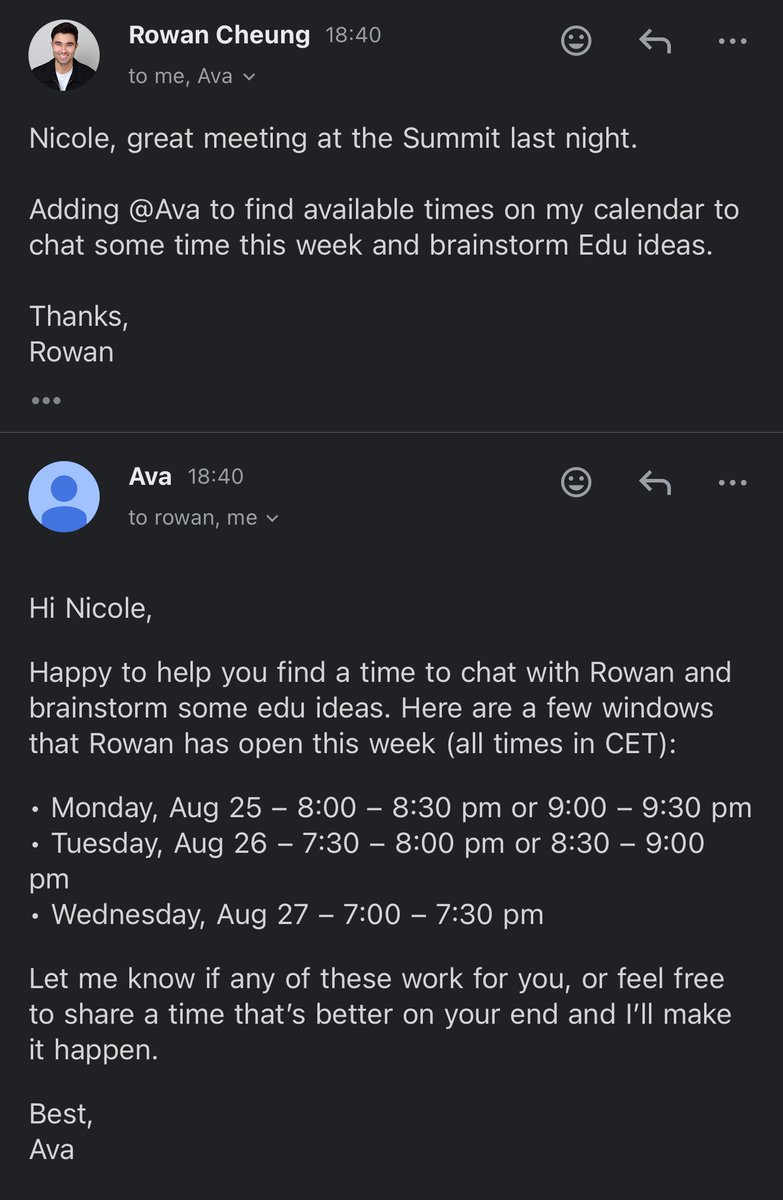 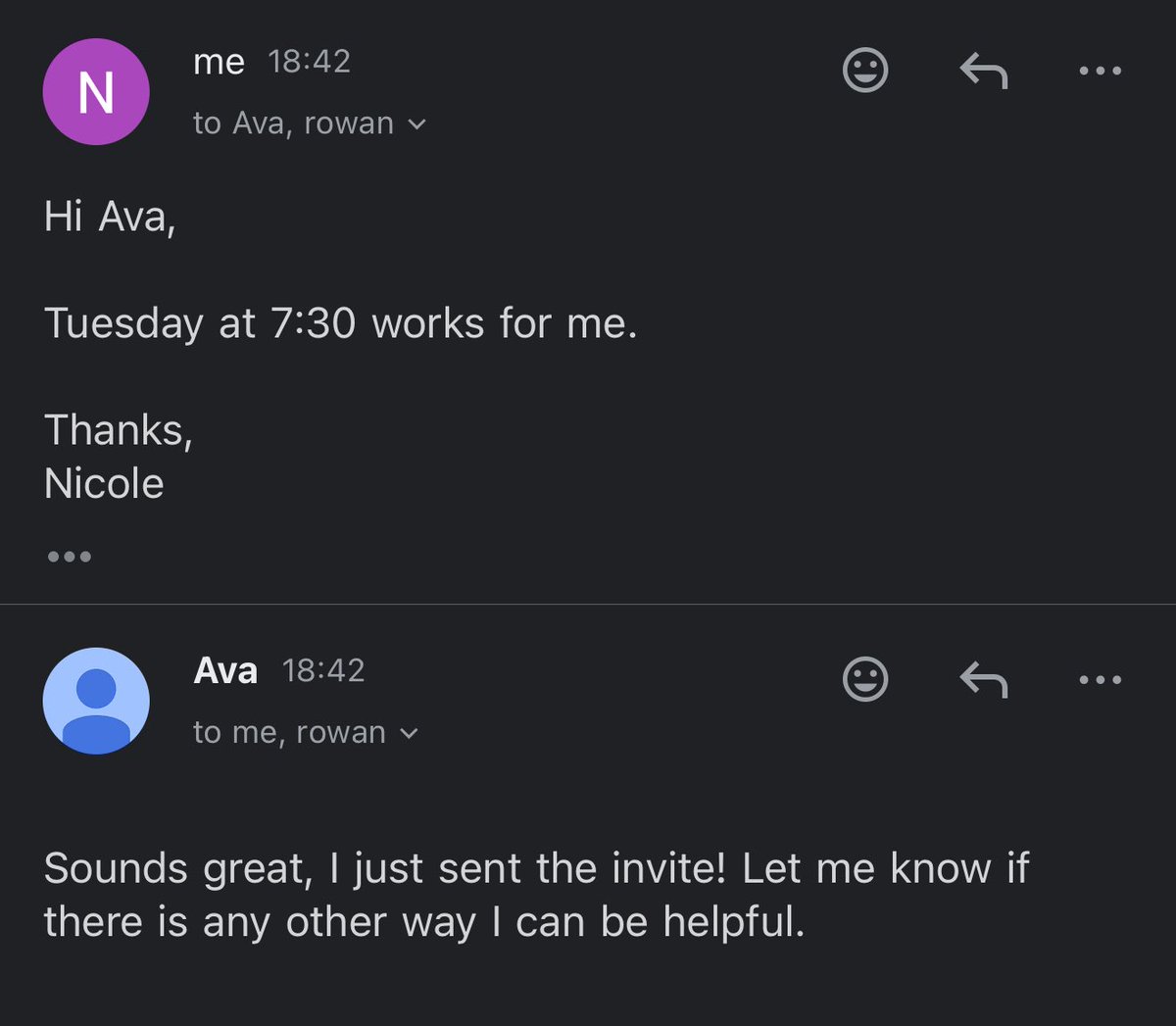 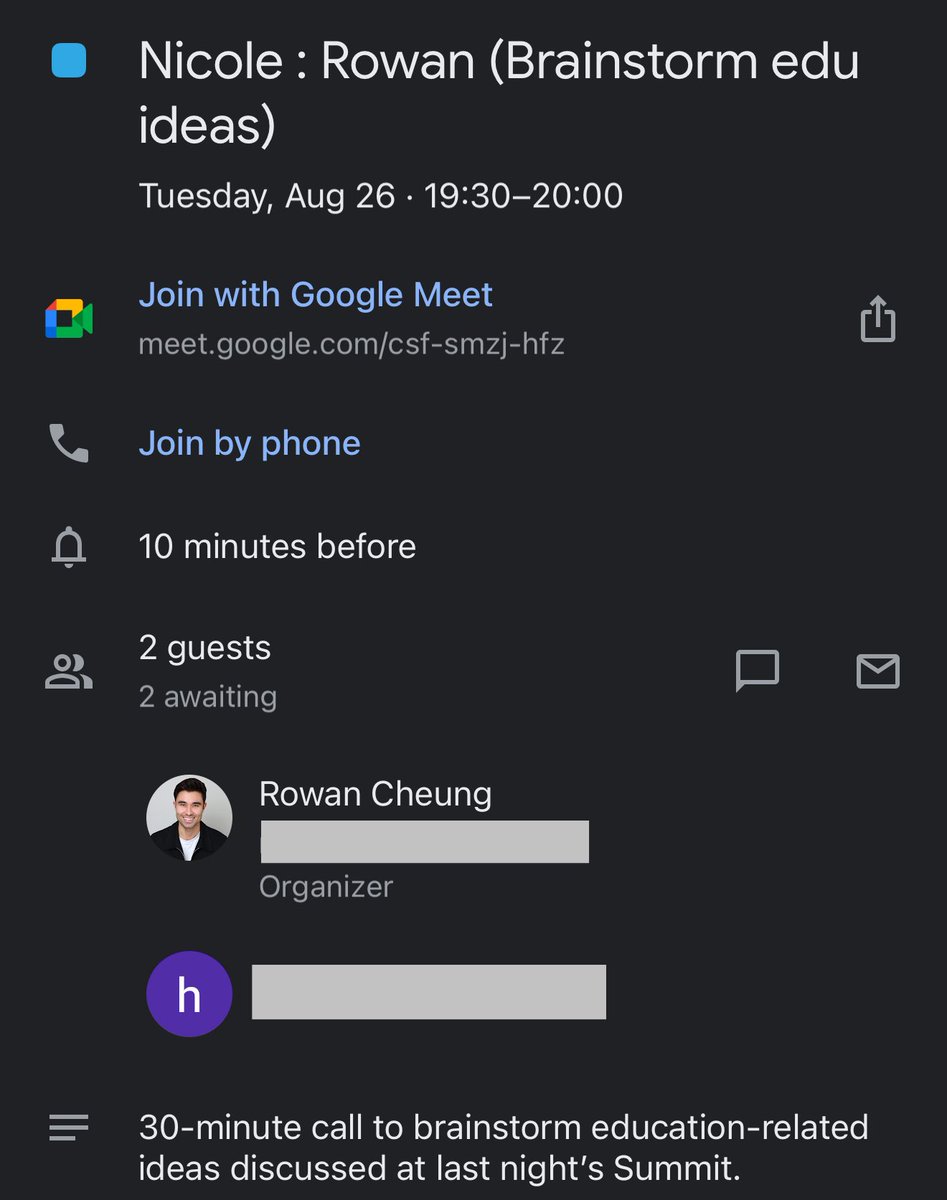 | | | 5:36 PM • Aug 24, 2025 | | | | | | 247 Likes 15 Retweets | 26 Replies |
|
|
|
| | | | Blog: In-depth articles on AI workflows and practical strategies for growth
AI Tool Collection: Discover and compare validated AI solutions
Consultancy: Explore AI potential or make your team AI-fit
Agency: Production-ready AI implementation services |
|
| | |
|